The error, verbatim
Jump to the fix ↓models/gemini-3-flash is not found for API version v1beta, or is not supported for generateContent. Call ModelService.ListModels to see the list of available models and their supported methods.
The fix that worked
Use a name that ListModels actually returns for your key, on v1beta:
curl -s -H "x-goog-api-key: $GEMINI_API_KEY" "https://generativelanguage.googleapis.com/v1beta/models?pageSize=1000" | grep '"name"'Tested on
- API
- Gemini API v1 and v1beta over REST, new free-tier AI Studio key
- @google/genai
- 2.27.0 and 3.0.0 (default API version checked)
- Node / OS
- 24.14.0 / Windows 11 Pro
- Date
- November 8, 2026
Contents
If your call to Gemini ends in 404 NOT_FOUND with “models/… is not found for API version v1beta, or is not supported for generateContent”, the API is telling you one plain thing: the name you sent isn’t on the list for that API version. It isn’t a permissions problem and it isn’t your key.
On November 8, 2026 I took a brand-new key and called 13 model names that people actually search for, each one on both v1 and v1beta, straight over REST so no SDK could change the request. Three things decide whether you get this error:
| What you sent | v1 | v1beta |
|---|---|---|
A name that doesn’t exist (gemini-3-flash, gemini-3.1-flash, gemini-pro) |
404 | 404 |
A version number with -latest (gemini-1.5-flash-latest, gemini-2.5-flash-latest) |
404 | 404 |
gemini-1.5-flash |
404 | 404 |
A preview or alias name (gemini-3-flash-preview, gemini-flash-latest) |
404 | listed (gemini-3-flash-preview answered 200) |
gemini-3.5-flash |
200 | 200 |
Ask the API which names your key can call, on v1beta, and copy one exactly:
curl -s -H "x-goog-api-key: $GEMINI_API_KEY" "https://generativelanguage.googleapis.com/v1beta/models?pageSize=1000" | grep '"name"'If you’re on @google/genai 3.0.0 and the name is in that list, the SDK is calling v1: pass apiVersion: 'v1beta' (below).
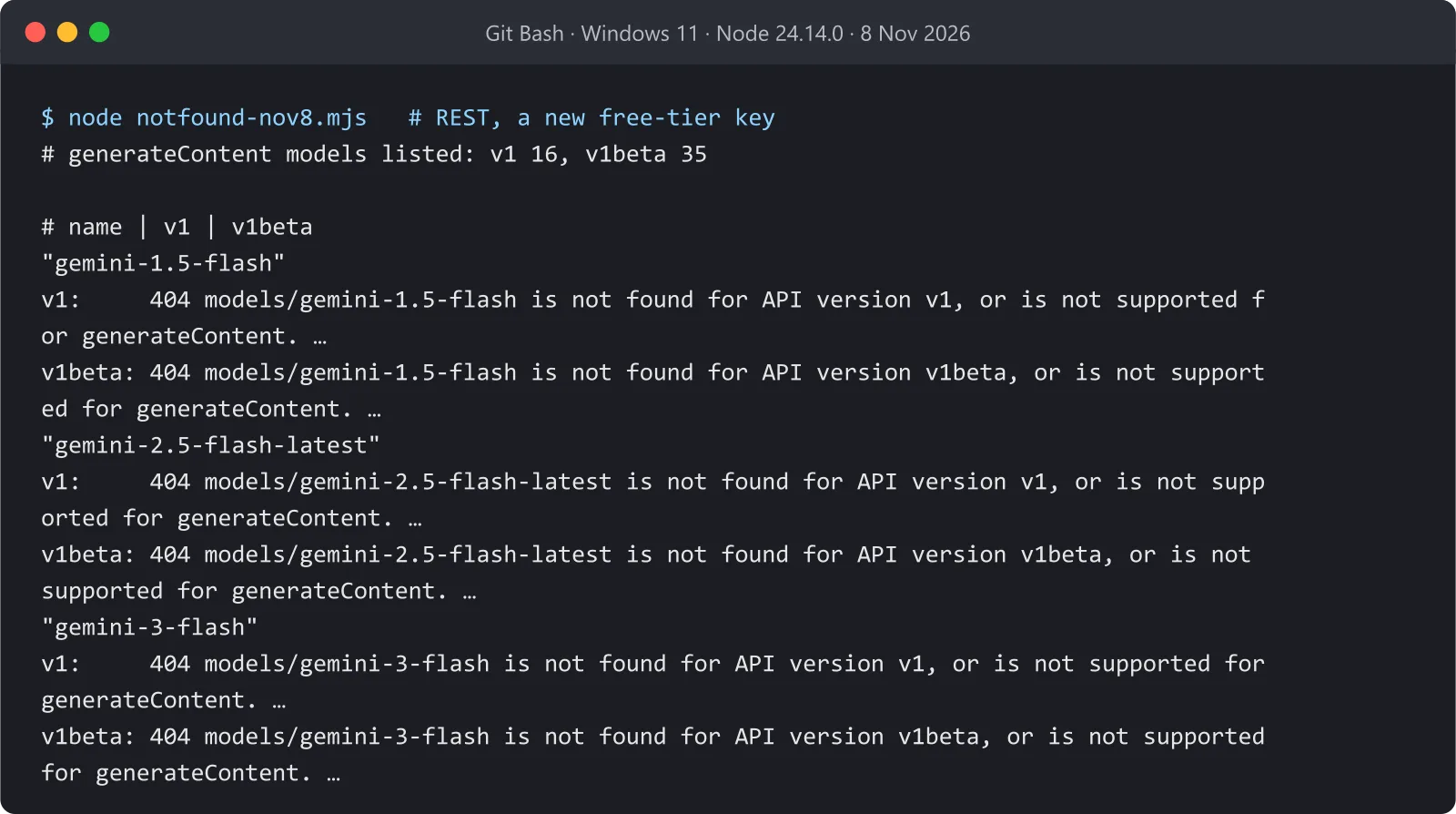
The names that look right but don’t exist
Most of the searches for this error are some form of “gemini 3 flash is not found” or “gemini 1.5 flash latest is not found”. Both come from guessing a model name from a blog post or a changelog.
- There is no
gemini-3-flashorgemini-3.1-flash. The list hasgemini-3-flash-preview(v1beta only) andgemini-3.1-flash-lite, plus image and TTS variants. Drop the-previewand the name stops existing. -latestonly works as a whole alias.gemini-flash-latest,gemini-flash-lite-latestandgemini-pro-latestare real names onv1beta. Gluing-latestonto a version, likegemini-2.5-flash-latestorgemini-1.5-flash-latest, gives the 404 on both versions. Old tutorials used that pattern for 1.5; it’s gone.gemini-proand everything 1.5 are no longer served, and for these Google doesn’t send the friendlier “no longer available” message. You get the generic not-found text.
Typing mistakes behave differently, which helps tell them apart. Gemini-2.5-Flash with capitals, or "gemini-2.5-flash " with a trailing space from an environment variable, didn’t return a 404 at all. They returned 400 with GenerateContentRequest.model: unexpected model name format. If you see that 400, look for whitespace in your config before you look at the model.
Switching to v1 can’t fix it
A common answer to this error is “you’re on v1beta, use v1”. I compared the two lists for the same key. v1 returned 16 Gemini models that support generateContent, and v1beta returned 35. Every one of the 16 was also on v1beta, and nothing was on v1 alone. So moving a call from v1beta to v1 can only remove names. The 19 names that exist on v1beta only are every -preview model, the three -latest aliases, the TTS models, the newer omni models and a few others.
That’s exactly the trap in the new SDK.
@google/genai 3.0 sends you to v1
I let both SDK majors build a request without sending it and read the URL they would call:
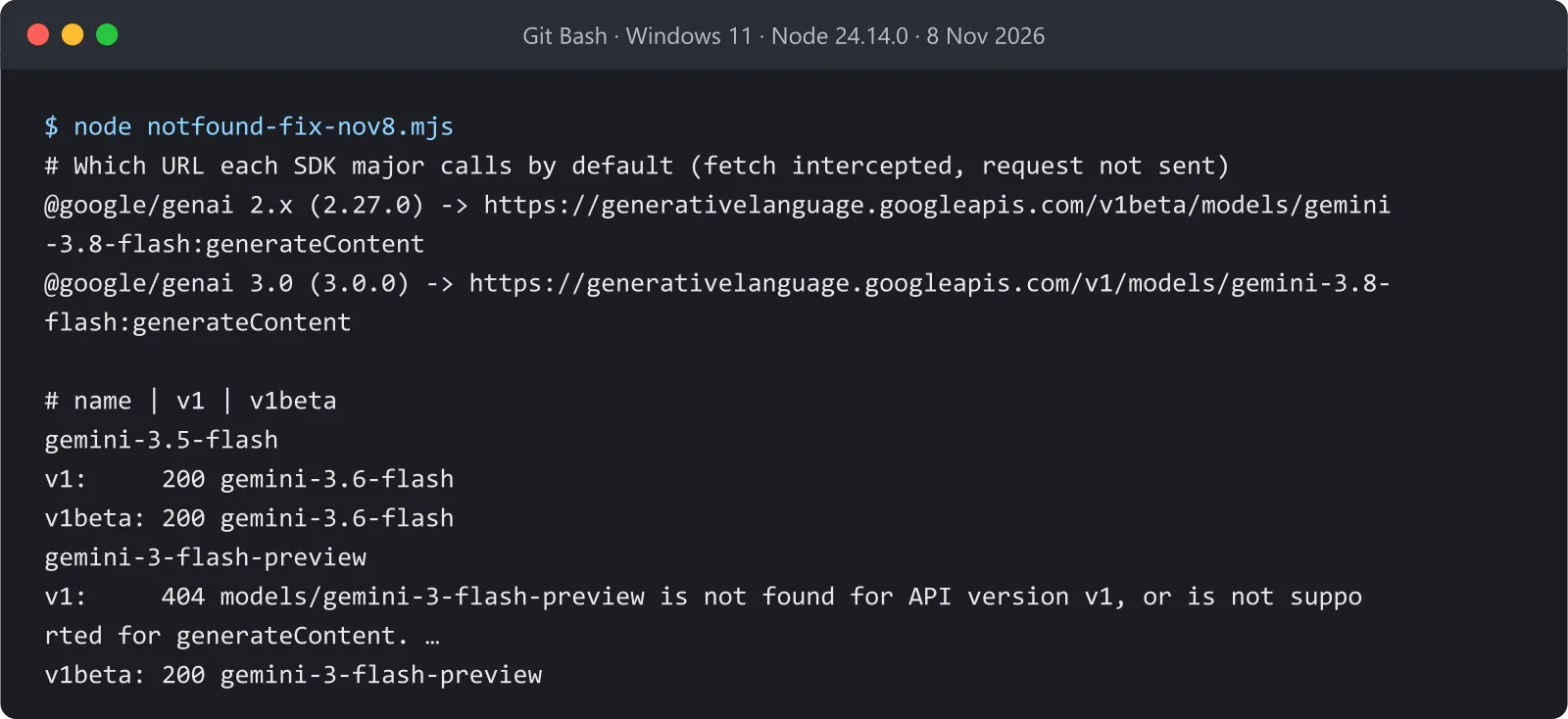
So code that ran on 2.x with gemini-3-flash-preview or gemini-flash-latest starts printing “is not found for API version v1” the moment you upgrade to 3.0.0, with no change of your own. Pin the version back in the client:
const ai = new GoogleGenAI({ apiKey: process.env.GEMINI_API_KEY, apiVersion: 'v1beta' });I tested that setting, and the GOOGLE_GENAI_API_VERSION=beta environment variable, on November 7 for the retired-models post; both bring the preview names back.
Two odd results worth knowing
gemini-3.5-flash answered on both versions, but the response said modelVersion: "gemini-3.6-flash". The name you send isn’t always the model that answers. If you log or bill by model, log the modelVersion field from the response, not your request.
The model Google’s own retirement message points you to, gemini-3.8-flash, didn’t answer within 45 seconds on either version, three tries each, that evening. gemini-flash-latest on v1beta did the same. A name being on the list means the API knows it; it doesn’t mean it will answer quickly at peak hours. Keep a fallback name that worked for you.
Quick answers
Does ListModels prove a model will work? No. gemini-2.5-flash and gemini-2.5-flash-lite are both in the v1 list, and both return “no longer available to new users” with a new key. The list rules names out; only a real call rules them in. That case has its own post: Gemini 2.5 Flash “no longer available to new users”.
Is this error about my region or billing? Not on these tests. The same key reached gemini-3.5-flash and gemini-3-flash-preview in the same minute. A quota problem shows up as 429, see Gemini API 429 RESOURCE_EXHAUSTED.
I use Python or another SDK. The error comes from the API, so the same names behave the same way. What changes is which API version your SDK calls; the request URL (/v1/ or /v1beta/) in a debug log tells you.
What I ran
Two Node scripts on Windows 11 with Node 24.14.0 and a new free-tier key from AI Studio, on the evening of November 8, 2026. The first lists the models on both versions and calls 13 names on each over plain fetch, with a one-token reply so it costs almost nothing. The second calls names from the list and reads the URL that @google/genai 2.27.0 and 3.0.0 build by default. The scripts and their full output are public; the key is read from the environment and never printed.
— N.K., end of entry No.096